
Municipal Migration Governance Plan for Migrants and Refugees in Quilmes
Municipality of Quilmes
Mayor
Mayra Mendoza
Start of Project
01/01/2022
End of Project
12/31/2027
Overview
With the second phase of the Municipal Migration Governance Plan (2023-2027), Quilmes maintains its commitment to inclusive and intercultural migration governance, based on the city's identity as Argentina's first ‘plurinational and intercultural’ municipality. Building on the first phase (2019-2022), the plan focuses on access to rights, social and labour inclusion, institutional strengthening, and celebration of interculturality. Under the leadership of Mayor Mendoza, the plan connects municipal departments, the United Nations, civil society, the private sector, and the local community.
Home to around 54,000 people of foreign origin, comprising 8% of the total inhabitants, Quilmes launched its first Municipal Migration Governance Plan in 2019, offering an overarching strategy for policy planning.
Both iterations of its Municipal Migration Governance Plan have three main axes:
Ensure access to rights for migrants and refugees.
Promote the institutional strengthening of local policies affecting the migrant and refugee population.
Highlight and celebrate interculturality.
Key activities include:
Provision of services through the Office for Migrant Assistance, including help with document processing, provision of equal access to health care and education, and addressing cases of discrimination.
Organization of Migrant Care Workshops in specific neighborhoods.
Offering awareness workshops and employability programs aimed at migrant and refugee communities.
Setting up Comprehensive Mobile Consulates to bring consular services closer to the target population.
Promoting active political and social participation of migrants and refugees.
Improving the infrastructure of schools with large attendance of refugee students.
Realised Impact [as of March 2023]
More than 120 Migrant Attention Days in the neighborhoods.
More than 4,000 neighbors carried out procedures and received advice.
More than 1,800 people obtained residency.
More than 14 Integral Consular Days (Bolivia, Paraguay, Venezuela, Uruguay, and Peru).
Regularization of migrant organizations in the district and support to institutions through subsidies.
3 agreements signed with DNM, UNHCR, and IOM.
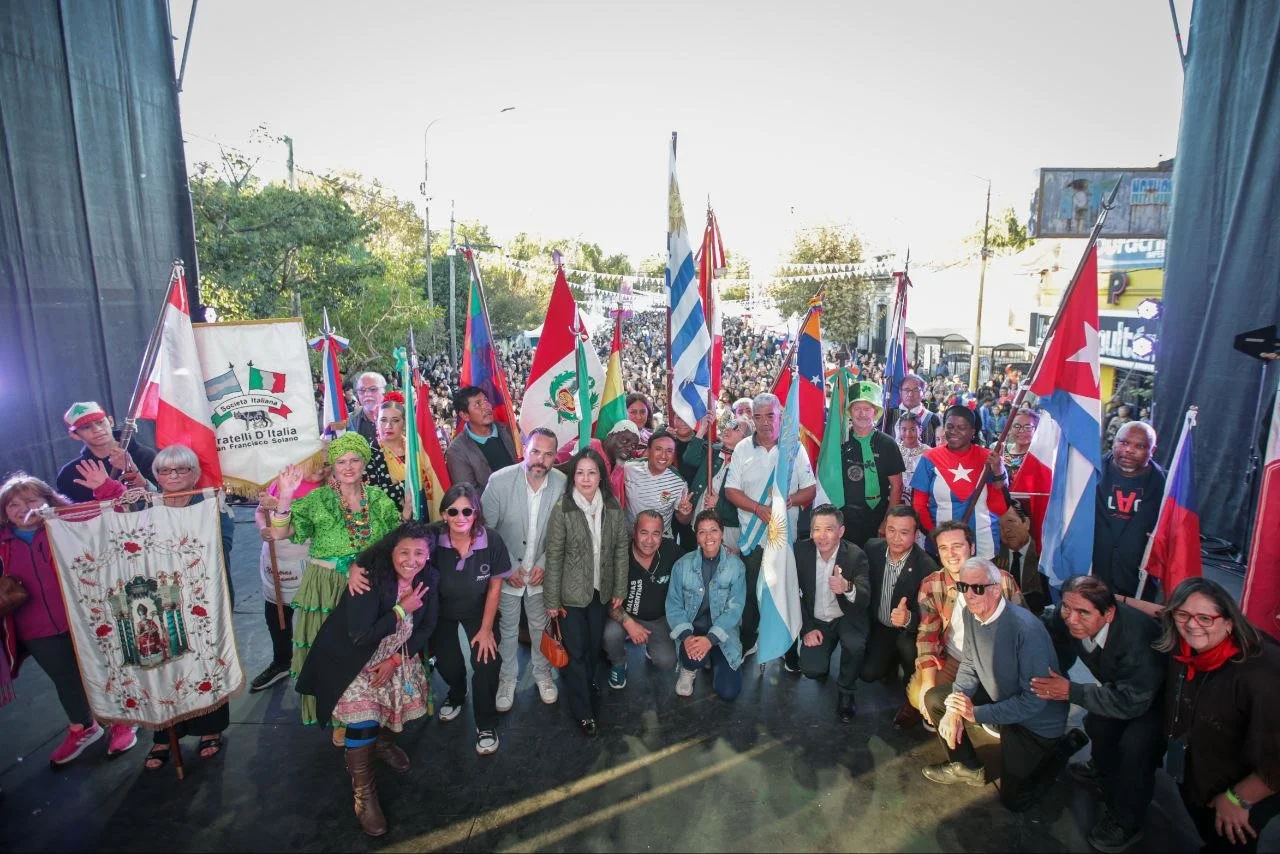
More than 100,000 people attended the 2022 and 2023 editions of the Fiesta de las Colectividades.
8 cycles Latidos de Colectividades (Collectivities' Beats).
2 Collectivities Festivals attended by 200,000 people.
An increase of more than 80% of political participation of migrants from 2019 to 2023. Despite voting being a limited right, 20,000 migrants voted in the 2019 district elections, a significantly higher number than in 2015.
Impact Update [as of November 2025]
Since 2019, more than 5,900 residents have received support from the Directorate for Migrants, and more than 2,000 migrants have obtained residency and accessed essential services. In 2024, Quilmes expanded its efforts by organizing Comprehensive Consular Days for Bolivia and Paraguay and launching the ‘Raíces’ programme to promote the economic inclusion of migrant women. Since then, more than 40 women entrepreneurs have participated in local fairs and professional training.
This work takes place in a national context of regressive political reforms on migration that criminalize and seek to restrict migrants' access to healthcare, which has hampered the development of a series of actions linked to the plan, such as the ‘regularization days’ that were organized together with the National Directorate of Migration.
Priority Objectives

Improving migration governance and forced displacement protection

Providing access to urban infrastructure, social services, and education regardless of status

Realising socio-economic inclusion