
Cartagena de Indias: “Join the Neighbourhood” strategy
Cartagena de Indias District
Mayor
Dumek Turbay Paz
Start of Project
12/31/2023
End of Project
12/31/2027
Overview
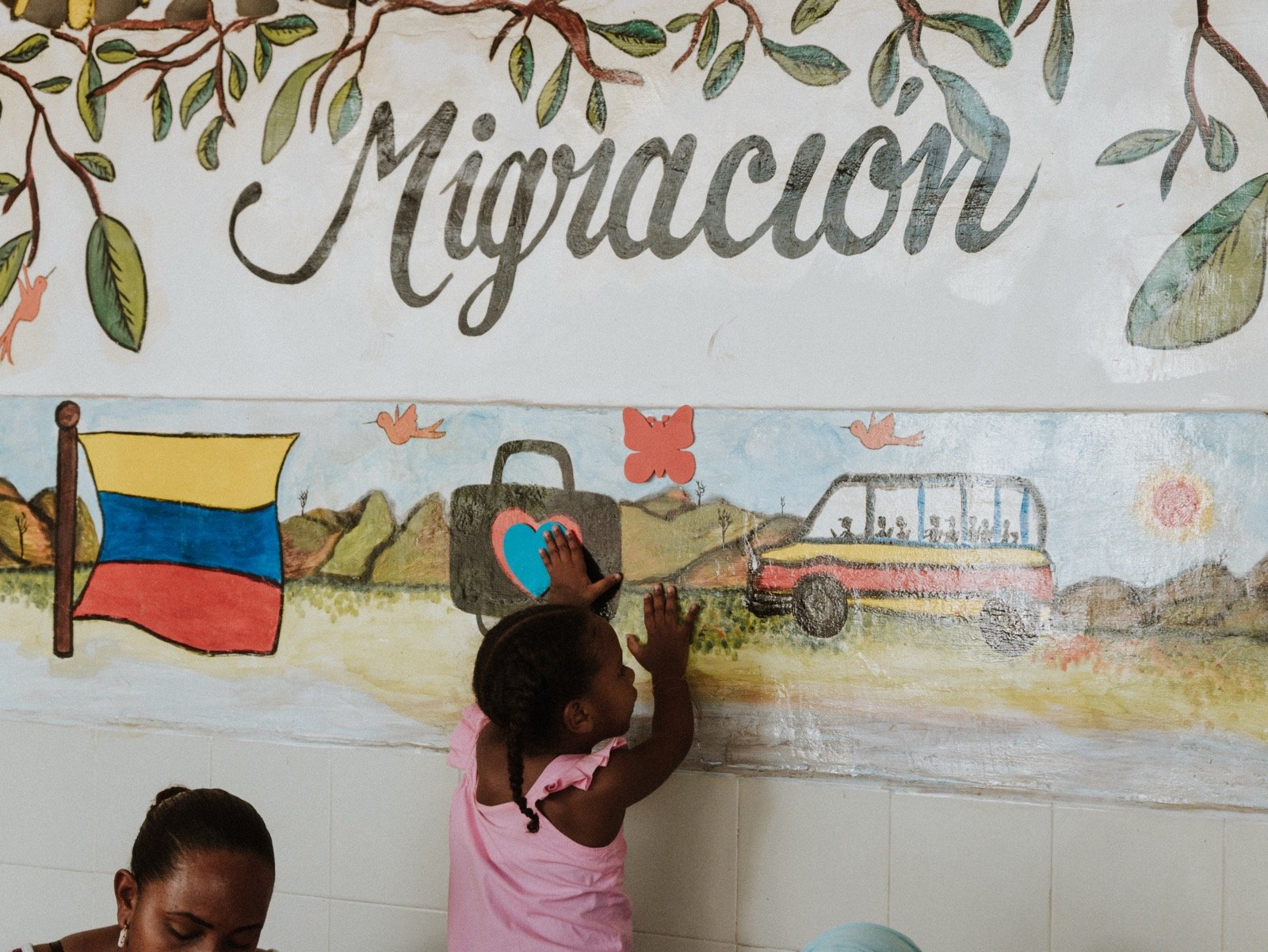
As part of the Cartagena District Development Plan: City of Rights 2024–2027, the Mayor’s Office of Cartagena de Indias has implemented “Intégrate al Barrio,” (Join the Neighbourhood), a territorial strategy of the Intégrate Centre (Centre for Migrant Services) aimed at overcoming the barriers that have historically limited access to quality institutional services for migrant and refugee populations and host communities.
Its objective is to facilitate access to rights through territorial outreach initiatives in vulnerable neighbourhoods, bringing institutional services directly to the population. This includes:
assistance with immigration procedures;
registration for Sisbén (Colombia’s social protection identification system) and corresponding referral;
employability, with job offers and training;
psychosocial support;
legal advice and information on rights; and
health-care and guidance, including pathways for people in an irregular immigration status.
The strategy views integration as a two-way process that strengthens both the migrant and refugee population and their host communities. To this end, it coordinates district and national entities, international cooperation, and civil society organizations under a human rights-based, territorial, differential, and intersectional approach. With this initiative, the District reaffirms its commitment to making access to rights a daily reality for those who need it most.
Realised Impact (As of October 2025)
Since its launch in 2024 through March 2026, “Intégrate al Barrio” has held nine outreach events in eight neighborhoods of Cartagena, reaching more than 2,000 migrants, refugees, returnees, and members of the host community who otherwise would not have had access to the services of the Intégrate Center.
Its impact is multidimensional:
First, it reduces geographical barriers: the population gains access to legal guidance, psychosocial support, health and education pathways, and regularization procedures without having to travel to the Center’s headquarters. This is particularly significant for people in an irregular migratory situation, who—for economic or employment reasons, or due to fears related to their status—would not have sought out these services on their own.
Second, it enables the early identification of complex cases that remain invisible in exclusively in-person systems, facilitating more timely responses through referral pathways and coordination with relevant agencies.
The strategy also strengthens institutional trust by promoting direct engagement with leaders and communities, reaffirming a governance model based on active listening and a local presence. By coordinating more than 20 inter-institutional actors—including the International Organization for Migration (IOM), district entities, and civil society organizations—it expands the range of services beyond those offered by the Center.
Finally, by involving the host community in each session, this helps reduce stigma, fosters a culture of hospitality, and reinforces integration as a two-way process, in line with SDGs 10 and 16.
Priority Objectives

Improving migration governance and forced displacement protection

Protecting those most vulnerable

Providing access to urban infrastructure, social services, and education, regardless of status

“In Cartagena [de Indias], we govern by listening: we bring institutional services into the neighborhoods to hear and serve those who need them most. Migrants and refugees are part of our city, and we are building a more inclusive Cartagena where everyone—regardless of origin—can exercise their rights”