
Aulas Inclusivas – La Aldea: Building Social Cohesion in Bogotá Classrooms Shaped by Migration
Bogotá
Mayor
Carlos Fernando Galán
Start of Project
2025
End of Project
2026

Overview
Aulas Inclusivas – La Aldea is a school-based socio-emotional learning initiative designed to strengthen social cohesion in public-school classrooms with a high presence of Venezuelan migrant students in Bogotá. Developed in partnership with the Inter-American Development Bank (IDB), Bogotá’s Secretariat of Education, and Click+Clack Learning Laboratory, the programme targets fifth-grade students and is delivered by regular classroom teachers through one weekly session integrated into the school day over four months. It requires no additional instructional time and no external facilitators, making it highly scalable within the public education system.
The programme uses illustrated stories, structured classroom discussions, cooperative exercises, movement-based games, and audiovisual materials to build empathy, perspective-taking, trust, conflict resolution, and inclusive peer behaviour. Its primary objective is to reduce discrimination and exclusion in school environments affected by migration, while strengthening belonging, classroom cohesion, and positive attitudes toward migrant and refugee students. The initiative also includes teacher training, implementation support, and a rigorous impact evaluation through a randomized controlled trial in 114 public schools in Bogotá.
Expected and Acheived Impact
The initiative has already generated encouraging preliminary results. Compared to students in control schools, students participating in Aulas Inclusivas demonstrated stronger empathy toward others, greater openness to Venezuelan classmates, and improved perceptions of classroom cohesion and peer support. Students in program schools were more likely to report willingness to befriend Venezuelan peers and less likely to report observing classmates mocking or ridiculing migrant students. These findings suggest meaningful early shifts not only in attitudes, but also in observable peer behavior.
The pilot was implemented in 114 public schools across Bogotá’s districts of Kennedy, Bosa, and Suba, reaching 7,416 fifth-grade students. This makes Aulas Inclusivas one of the most robust school-based social cohesion interventions in the region addressing migration-related inclusion. The model is particularly promising because it is embedded into the regular curriculum, delivered by existing teachers, and supported by ready-to-use materials and pedagogical guidance.
Over time, the initiative is expected to contribute to more inclusive school environments, reduce xenophobia from an early age, and provide a practical, evidence-based model that other education systems in Latin America can adapt to strengthen the integration of migrant and refugee children.
Lessons Learned
A key positive lesson is that schools are a strategic entry point for reducing prejudice, discrimination, and exclusion before these dynamics become entrenched. The pilot reinforces the value of socio-emotional learning interventions that are embedded in the regular curriculum, implemented consistently over time, and led by teachers rather than external facilitators. It also shows that children respond well to high-quality, age-appropriate materials that combine storytelling, reflection, and cooperative practice.
Another important lesson is that formal school access alone does not guarantee meaningful integration. Children often bring into the classroom negative narratives and stereotypes about migrants that they absorb from their broader social environment. As a result, school-based inclusion efforts need continuity, teacher accompaniment, and alignment with broader strategies on coexistence, anti-discrimination, and social inclusion. While the preliminary results are promising, long-term institutionalization and scale-up will require sustained political commitment, implementation capacity, and continued investment in evidence generation and teacher support.
Priority Objectives

Protecting those most vulnerable

Providing access to urban infrastructure, social services and education regardless of status

Eliminating all forms of discrimination and promoting evidence-based public discourse
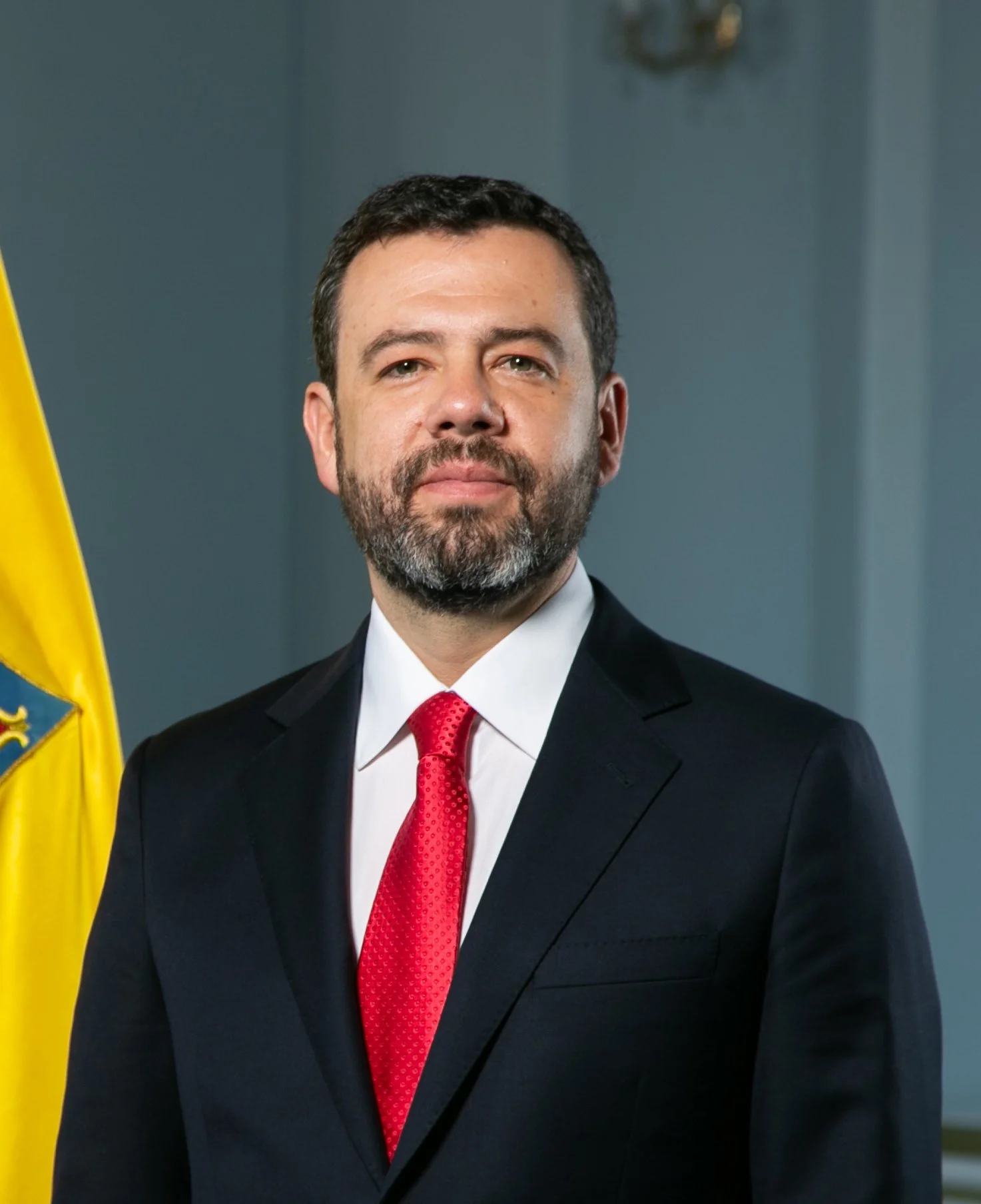
“Cities are where migration becomes real. National governments shape rules, international actors shape incentives, but cities deliver the services, hold communities together, and manage the consequences when systems fail. Bogotá is committed to building systems, not temporary fixes. Integration is not a weakness. Integration is governance.”