
Santo Domingo de los Tsáchilas Commits to Institutionalizing Provincial Governance for Human Mobility and Socioeconomic Inclusion of Migrants and Refugees
Santo Domingo de los Tsáchilas
Governor
Johana Yadira Núñez García
Start of Project
January 2025
End of Project
Ongoing
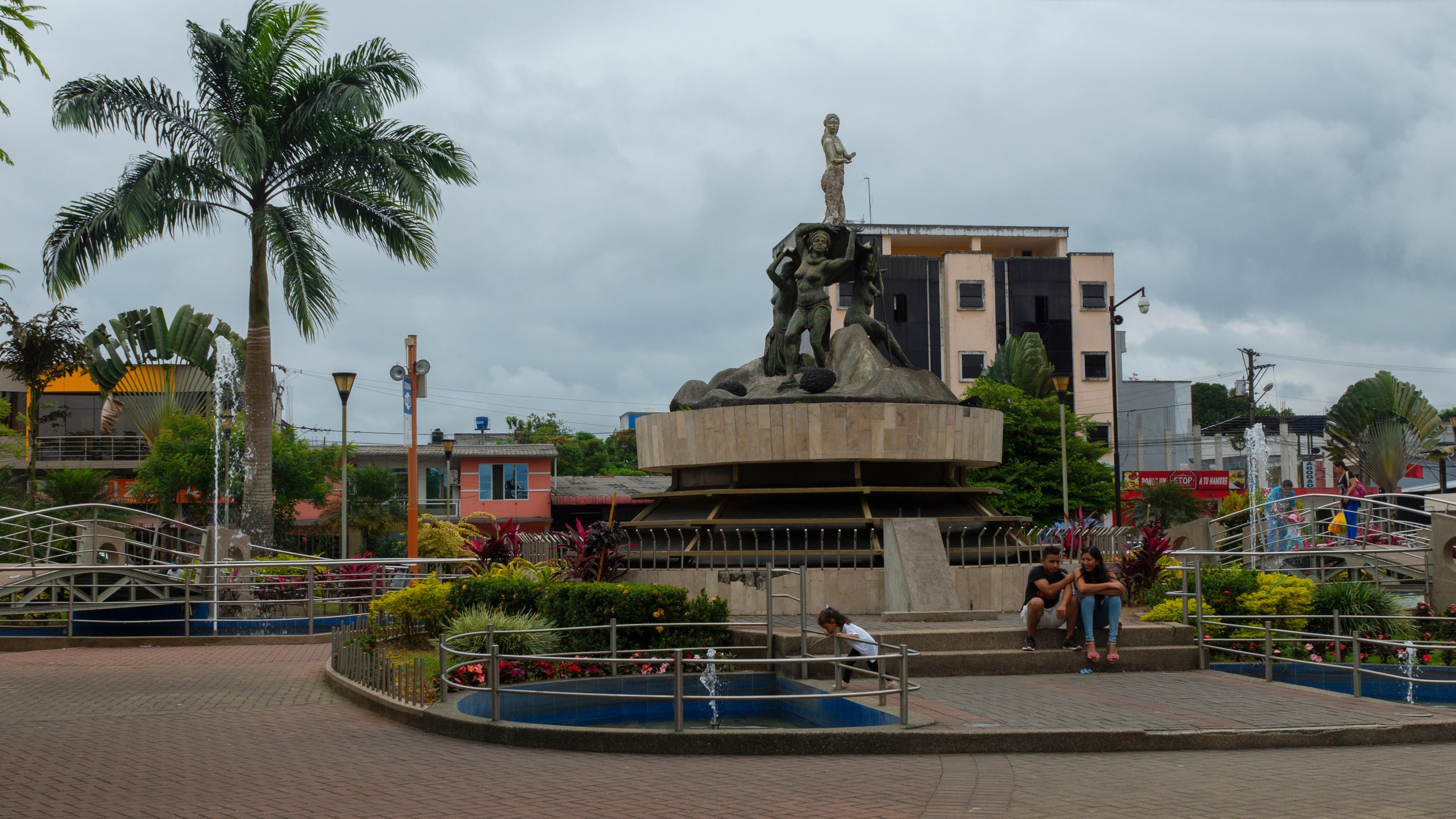
Photo: Alejo Miranda/Shutterstock
Overview
This initiative promotes a model of territorial governance for human mobility led by the Provincial Government of Santo Domingo de los Tsáchilas, aimed at protecting the rights, socioeconomic inclusion, and social cohesion of migrants, refugees, and host communities. This process is grounded in the Provincial Ordinance for the Promotion and Protection of the Rights of People on the Move.
Through the Provincial Roundtable on Human Mobility, the province brings together public institutions, international cooperation agencies, civil society, and local governments to coordinate comprehensive responses regarding access to services, livelihoods, the prevention of xenophobia, and the strengthening of institutional capacities.
The initiative aligns with the Development and Land Use Plan, the 2030 Agenda, and the Global Compact on Migration and the Global Compact on Refugees, incorporating human rights, gender, and intercultural approaches. The main objectives are: implementation of the Migrant Centre in coordination with the Santo Domingo Cantonal Council for the Protection of Rights; promotion of entrepreneurship and marketing programmes; and the creation of multi-stakeholder dialogue spaces that contribute to lasting solutions for the population in situations of human mobility and the host population.
Expected and Achieved Impact
Positive impacts have been achieved in strengthening territorial governance of human mobility in the province of Santo Domingo de los Tsáchilas, consolidating the Provincial Government’s leadership as a coordinator of comprehensive, coordinated, and sustainable responses to the challenges of migration and forced displacement.
At the institutional level, the capacity of the Provincial GAD and cantonal governments has been strengthened through the Cantonal Councils for the Protection of Rights in Santo Domingo and La Concordia, enabling them to plan, coordinate, and implement actions aligned with the Provincial Ordinance on Human Mobility, the Territorial Development and Planning Plan, and international frameworks for the protection of the rights of migrants and refugees. The Provincial Human Mobility Roundtable has established itself as a permanent space for multilevel and multi-stakeholder governance, facilitating coordination among public entities, international cooperation agencies, civil society, academia, and the private sector.
In the social and economic spheres, the initiative has promoted more inclusive access to services, programs, and productive opportunities for people experiencing human mobility and host communities, helping to reduce vulnerabilities, prevent discrimination, and strengthen social cohesion. Notably, it has supported initiatives for socioeconomic inclusion, such as the business incubator and accelerator, the Successful Entrepreneur program, the Marketing Center, and inclusive fairs, all aimed at generating sustainable livelihoods.
In the medium and long term, this will contribute to the development of sustainable solutions, the strengthening of intercultural coexistence, and the positioning of the Provincial Government as a key actor in the implementation of the Global Compact on Refugees, the Global Compact for Safe, Orderly, and Regular Migration, and the 2030 Agenda.
Lessons Learned
Among the key positive lessons learned is that leadership at the provincial level is essential for coordinating comprehensive, sustainable, and locally tailored responses to human mobility. The existence of a provincial regulatory framework, such as the Provincial Ordinance for the Promotion and Protection of the Rights of People in Situations of Human Mobility, has made it possible to institutionalize action and strengthen shared responsibility among public actors, international cooperation, and civil society.
The Provincial Roundtable on Human Mobility has established itself as an effective mechanism for multilevel, multi-stakeholder governance, facilitating coordination, information exchange, and the tracking of commitments. In this process, the importance of advancing the implementation of monitoring and follow-up mechanisms has become evident; these mechanisms allow for measuring progress, identifying gaps, and adjusting interventions in a timely manner, thereby strengthening evidence-based decision-making.
Likewise, international cooperation has been fundamental to strengthening technical capacities, incorporating human rights, gender, and intercultural approaches, and promoting good practices aligned with international standards. Socioeconomic inclusion initiatives have proven to be a key tool for reducing vulnerabilities and promoting lasting solutions, especially through access to sustainable livelihoods.
Among the main challenges identified are budgetary constraints and the need to consolidate integrated spatial information systems on human mobility, which would enable systematic monitoring of outcomes and impacts. Similarly, there remains the challenge of strengthening ongoing awareness-raising and communication efforts to prevent discriminatory and xenophobic rhetoric and promote a positive narrative about the contribution of migrants and refugees to local development.
Priority Objectives

Improving migration governance and forced displacement protection

Realizing socio-economic inclusion

Engaging in regional and multilateral partnerships and increasing city-to-city cooperation

“From Santo Domingo de los Tsáchilas, we reaffirm our commitment to governance of human mobility based on rights, inclusion, and shared territorial responsibility. We firmly believe that local and provincial governments are key actors in building lasting solutions alongside migrants, refugees, and host communities...We are committed to inclusive public policies that promote rights, social cohesion, and sustainable development.”