
Monrovia Go Green for Inclusive City Resilience and Adaptation
Monrovia City Government
Mayor
John-Charuk Siafa
Start of Project
01/07/2022
End of Project
30/06/2023
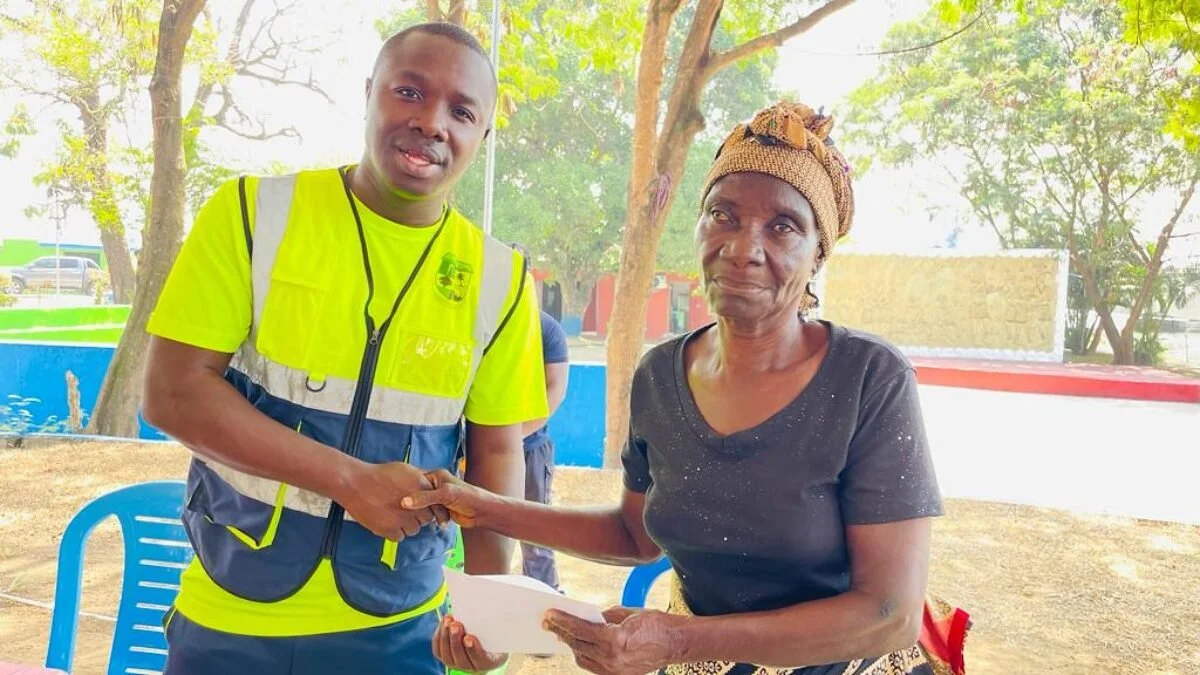
© City of Monrovia / Former Mayor Koijee with a client of the MonGROW Green project, which has provided business training and funding to more than 50 women entrepreneurs affected by flooding.
Overview
The Monrovia City Government will provide income-generating opportunities to migrant and internally displaced youth of Monrovia’s West Point and New Kru Town neighborhoods. The Monrovia Go Green for Inclusive City Resilience and Adaptation project will train migrant and IDP youth as tree stewards responsible for establishing green corridors by planting 20,000 mangrove and coconut trees in each neighborhood. These corridors will reduce flooding and coastal erosion within West Point and New Kru Town, while adding much-needed green spaces along Monrovia’s coast and river lines and incentivizing the closure of illegal waste dumping sites. At the same time, the Monrovia City Government will offer 150 interested youth job training and resources needed to connect to formal employment opportunities within the city. This project is the result of direct engagement with migrant and IDP communities and is in line with Monrovia’s proposed project for the MMC's Global Cities Fund for Migrants and Refugees.
Expected Impact
The Monrovia City Government anticipates two key impacts of this action:
Reduce the risk of flooding and environmental degradation while augmenting the green space of two neighborhoods with a high population of migrants and IDPs.
Migrant and IDP youth generate income and assets through employment and self-employment opportunities.
Priority Objectives

Protecting those most vulnerable

Providing access to urban infrastructure, social services, and education,
regardless of status

Realising socio-economic inclusion