
Freetown Climate Resilient Market Hub
Freetown
Mayor
Yvonne Aki-Sawyerr
Start of Project
2025
End of Project
Ongoing
Overview
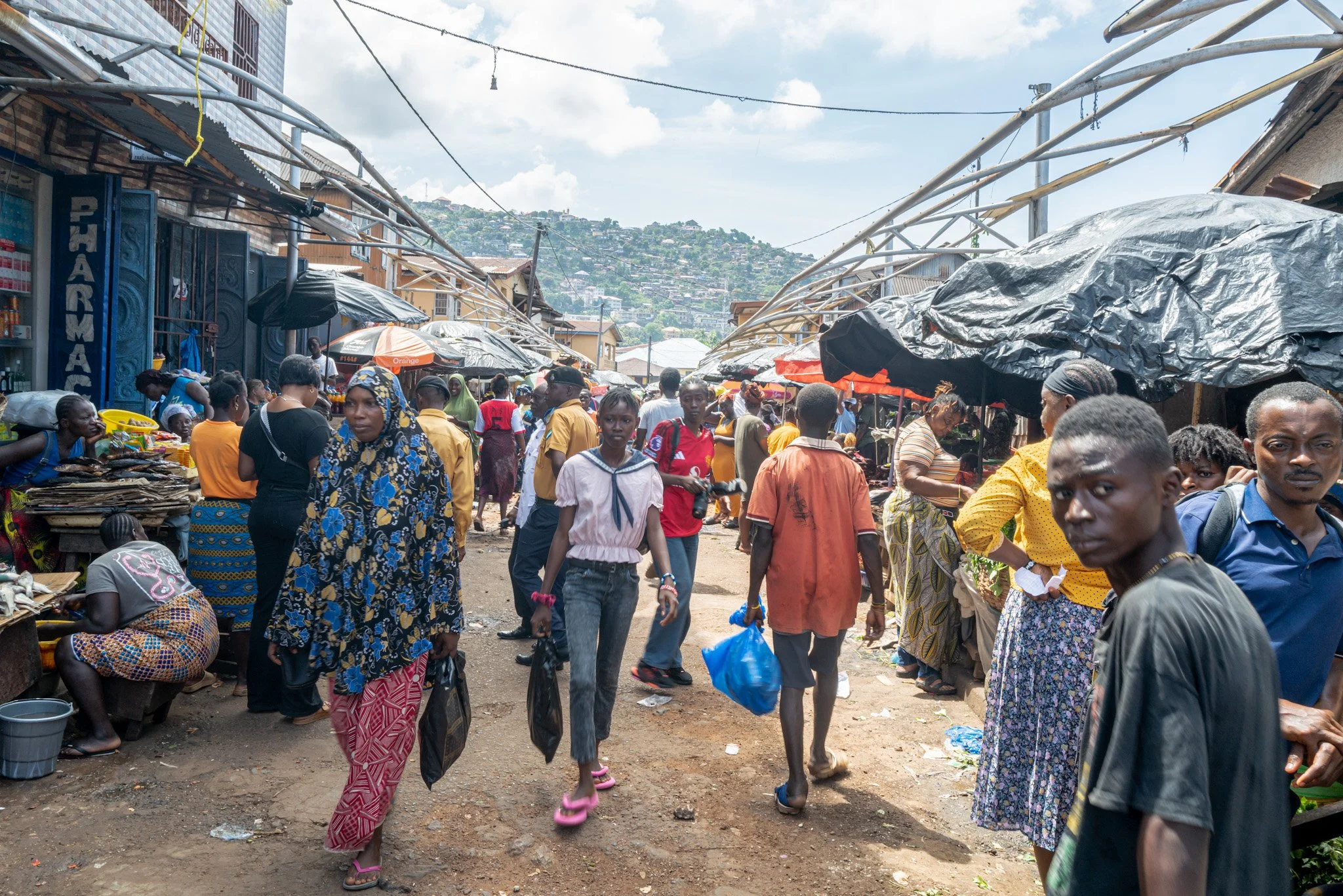
Freetown is establishing the Climate Resilient Market Hub—a flagship initiative to transform the city’s markets into climate-smart, inclusive, and economically vibrant spaces for migrant women and youth who make up the backbone of Freetown’s economy.
The project will introduce waste-to-energy technology, cold-chain infrastructure, and targeted capacity building to reduce greenhouse gas emissions, mitigate extreme heat, improve working conditions, and strengthen livelihoods. The initiative supports Freetown’s goal of creating 120,000 good green jobs for women and youth by 2028, delivering lasting benefits for people, the economy, and the environment.
Home to 1.3 million residents, Freetown has seen its population nearly double in recent years, driven largely by rural-to-urban migration as internal conflict and climate change have disrupted security and traditional livelihoods. More than a third of residents now live in informal settlements, facing overcrowding, poor sanitation, and unstable incomes—especially migrant women, who make up most informal traders across Freetown’s 42 markets. Yet, Freetown continues to invest in all its residents, turning migration into an opportunity for shared prosperity and international migration into a choice.
This project is supported by the Global Cities Fund for Migrants and Refugees (GCF), the Mayors Migration Council’s instrument to channel international funding directly to cities to implement inclusive projects of their own design.
Expected Impact
The Resilient Market Hubs project will deliver transformative impacts on Freetown’s climate resilience, economic inclusion, and migrant livelihoods.
Climate and Environment:
Through the installation of biodigesters and systematic waste collection in two markets, the project will divert hundreds of tons of organic waste from open dumping and drains. This will cut methane emissions, currently Freetown’s largest source of greenhouse gases by an estimated 40% in targeted markets. Cleaner environments will also reduce air pollution and localized urban heat island effects.
Economic Resilience and Financial Sustainability:
Migrant women traders, who are the backbone of Freetown’s food markets, will benefit from cool storage systems that extend the shelf life of perishable goods and reduce post-harvest losses by up to 60%. This stability translates into higher daily earnings and reduced reliance on costly coping strategies such as buying water for preservation. The management and operation of the various facilities such as the bio-digester, cool room and urban food hub, will create jobs and new income streams of income for existing women migrant groups and cooperatives.
Additionally, financial sustainability will be ensured through a public-private partnership (PPP) model, where a private operator manages revenues under a revolving fund system. Income generated will support cooperative payments, facility maintenance, and future expansion. This integrated approach builds economic resilience, women’s empowerment, and climate-smart urban markets, creating a sustainable model for inclusive growth and heat adaptation in Freetown.
Jobs and Skills:
The project will create at least 50 new green jobs in waste collection, biodigester operation, cool chain management, and hydroponic farming. Training and cooperative management support will equip over 500 women with technical and entrepreneurial skills, positioning them as leaders in the city’s emerging green economy.
Health and Wellbeing:
Improved sanitation through biodigester toilets, reliable water access, and shaded, cooler market environments will reduce heat stress, dehydration, and sanitation-related illnesses among traders and customers.
In total, the project is expected to reach at least 2,550 direct beneficiaries (women traders, workers, and trainees) and over 15,000 indirect beneficiaries, while creating systemic benefits for the city and its climate resilience agenda.
Collectively, these impacts will empower vulnerable migrant women, strengthen household resilience, and enhance the local economy while advancing Freetown’s transition to a more sustainable, climate-smart city.
Priority Objectives

Minimizing drivers of forced displacement, including climate change and environmental drivers

Protecting those most vulnerable

Realizing socio-economic inclusion

“This initiative will improve working conditions and income for those who keep our markets running every day—boosting our local economy and helping transform outward migration into a choice.”