
Bo City Enhances Smart Agriculture for Migrants and Refugees
Bo City Council
Mayor
Kobba Musa
Start of Project
September 2025
End of Project
Ongoing
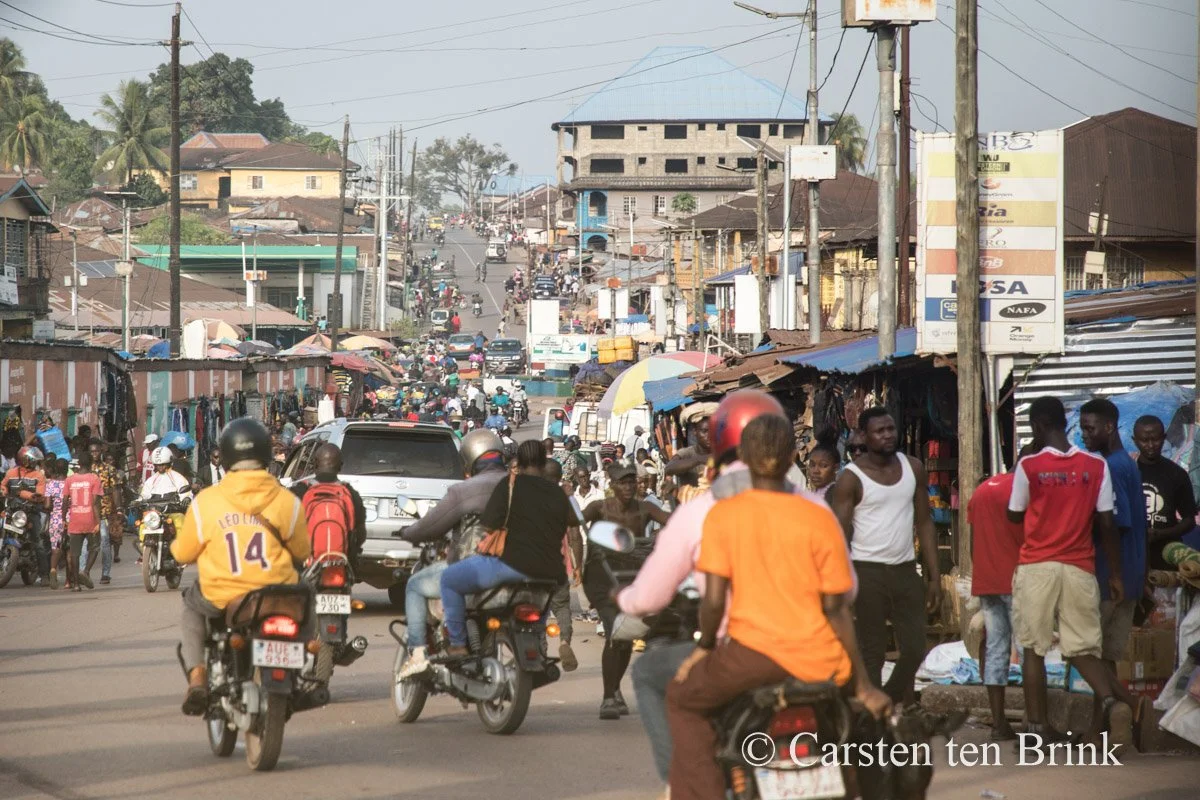
Photo: “Sierra Leone - Bo” by Carsten ten Bring, CC BY-NC-ND 4.0
Overview
Bo City, Sierra Leone’s second-largest urban centre, has long hosted migrants and refugees, especially during and after the 1991–2002 civil war. Displaced people from conflict-affected districts like Kailahun, Kono, and Bombali, as well as Liberian refugees from the 1990s and early 2000s, have settled in the city in search of safety and opportunity. Today, these communities face ongoing challenges such as limited access to employment, education, and healthcare. The “Bo City Enhances Smart Agriculture for Migrants and Refugees” project aims to provide sustainable livelihoods and empowerment for refugees and migrants through agricultural and aquaculture practices in an urban wetland. The project will utilize the natural environment of wetlands in the city to produce vegetables and farm fish, creating a space for economic development, food security, and integration into the local community. The objectives of the project are:
To improve food security by providing fresh, nutritious vegetables and fish.
To offer training and skill-building in vegetable production, aquaculture, and sustainable agricultural practices.
To create 10,000 job opportunities by 2027 and income-generating activities.
To promote the responsible use of urban wetland ecosystems
Expected Impact
The expected outcome of the project is as follows:
To ensure that 90% of refugees and migrants gain stable income through vegetable production and fish farming.
To ensure that all participants acquire valuable skills in farming, aquaculture, and sustainable agriculture, which enhances their employability and independence.
To contribute to food security and key government flagship feeds alone by providing fresh, locally grown vegetables and fish to migrant, refugee, and local populations.
To ensure that refugees and migrants become active members of the community, fostering social cohesion and cultural exchange through shared agricultural work.
To promote the use of sustainable farming practices, such as aquaponics, and help maintain the ecological health of the wetland area.
Priority Objectives

Minimizing drivers of forced displacement, including climate change and environmental drivers

Protecting those most vulnerable

Realizing socio-economic inclusion

“A rise in migration is often fueled by economic hardship, youth unemployment, and climate change. My city is working to create local opportunities so that migration becomes a choice, not a necessity.”