
Renewal of the programme to promote human rights for migrant persons in Esteban Echeverria
Municipality of Esteban Echeverría
Mayor
Fernando Gray
Start of Project
04/03/2019
End of Project
Ongoing
Overview
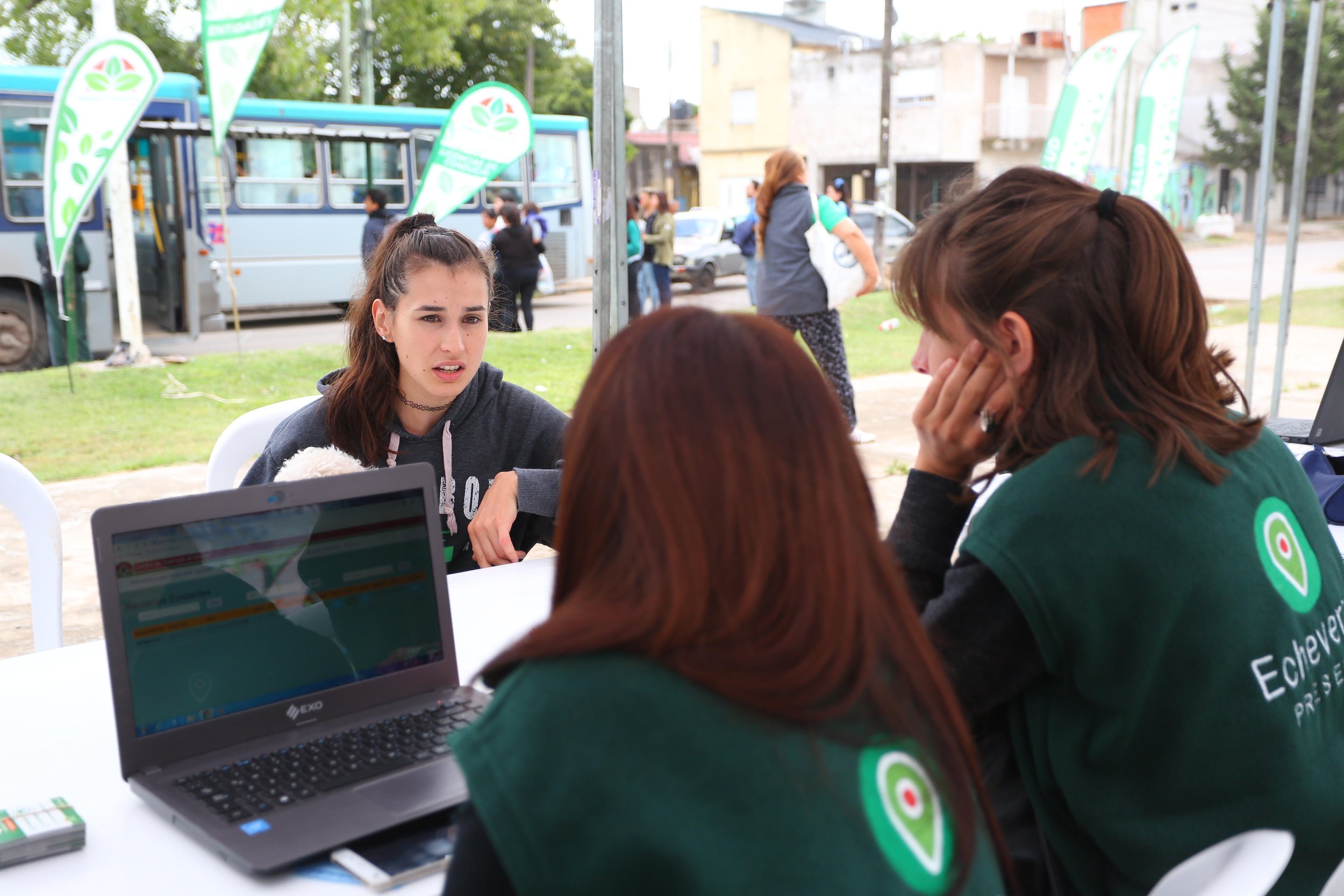
Through this comprehensive programme of care for migrant persons and refugees, the municipality of Esteban Echeverría seeks to ensure the defence of the rights in an adverse socio-political context.
It works on three lines of action to enable the integration of migrants and refugees:
Documentation:
Identity
Residence
Citizenship
Territorial Strengthening
Social and cultural integration activities
In conjunction with the National Directorate of Migration and the National Registry of Persons (RENAPER), the municipality offers workshops to promote the rights of migrants. Neighbours can carry out procedures to facilitate remote settlement, renewal of documentation and speed up the granting of residency to foreigners. Training workshops and advice on Law No. 25,871 on Migration and electoral participation are also provided.
To strengthen integration in host communities, the municipality promotes the development of social and cultural activities together with diaspora communities and organisations.
Expected Impact
Work is carried out through the entities to support the customs, experiences and festivities of each country. The aim is for the neighbours of Esteban Echeverría to share the customs of their country and feel "at home".
There have been Bolivian entries, meetings of Paraguayan residents, Spanish paellas, rice cultivation, among other activities.
Lessons Learnt
The project team has witnessed improvement in the:
Inter-institutional and intercultural dialogue;
Understanding of human rights;
Migrant people's visibility.
Reported Impact [as of June 2026]
Esteban Echeverría is making progress in local migration management by creating a plan/assessment aimed at guaranteeing the rights of migrants, according to the 2023 Local Migration Governance Assessment. This approach focuses on regularization, documentation, and the promotion of the social, economic, and cultural integration of the migrant, refugee, and asylum-seeking populations, in line with a human rights-based approach.
Priority Objectives

Improving migration governance and forced displacement protection

Protecting those most vulnerable

Providing access to urban infrastructure, social services, and education,
regardless of status

Realising socio-economic inclusion