
Nosotras Conectadas: Buenos Aires Creates Economic Opportunities for Women Migrants and Refugees in the Technology Sector
Buenos Aires
Mayor
Horacio Rodriguez Larreta
Start of Project
01/03/2021
End of Project
to be confirmed
Overview
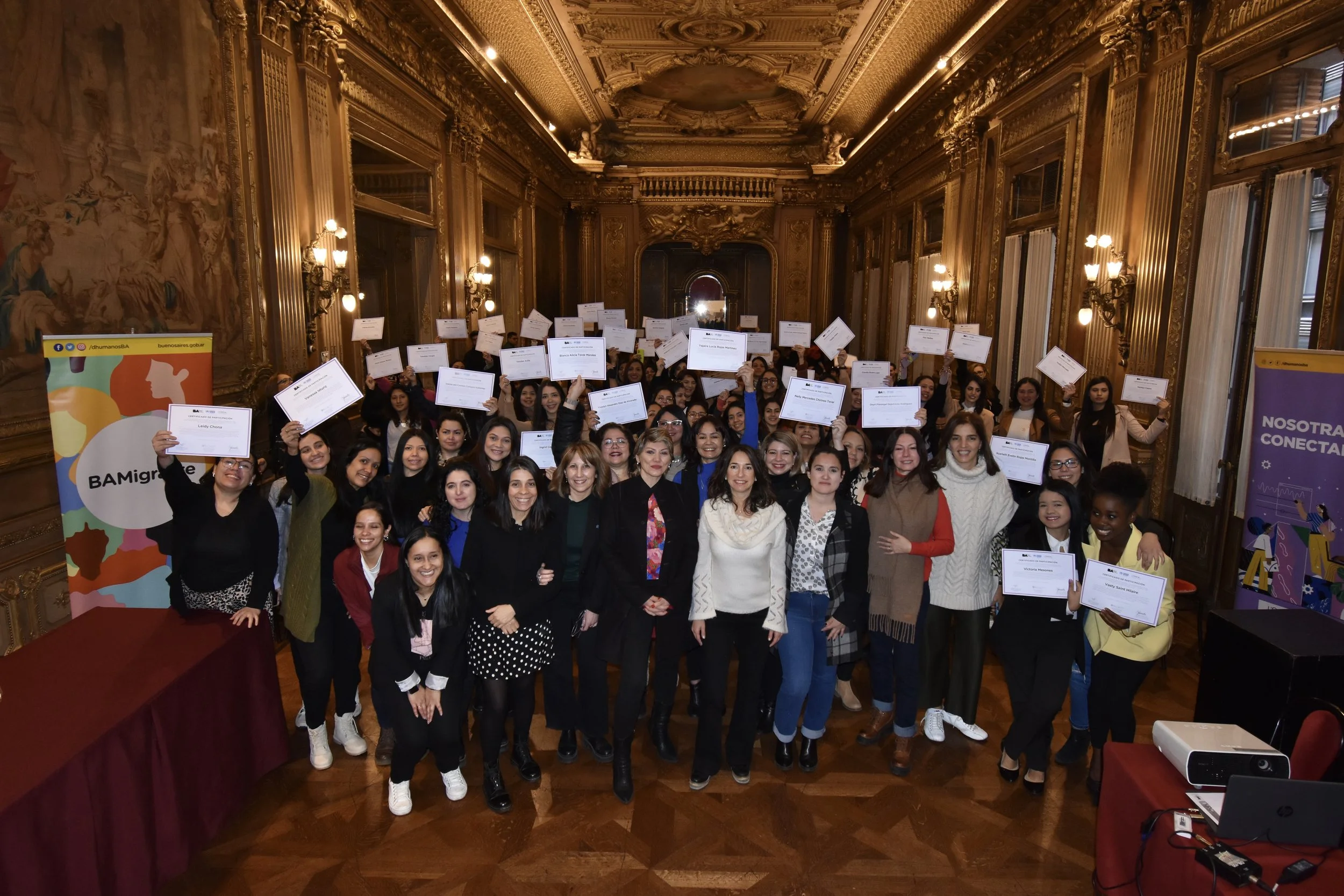
The City of Buenos Aires commits to coordinate the initiative Nosotras Conectadas (We Connected): a collaboration between the Government of the City of Buenos Aires, UNHCR, and the L'Oreal Foundation. The initiative aims to promote employment of women migrants, refugees, asylum seekers, stateless individuals, and others with international protection needs, in the digital technology sector.
The Nosotras Conectadas project provides training in technological skills related to programming and digital marketing, with the goal of providing equitable opportunities for this population in the formal employment sector. The project specifically seeks to integrate vulnerable women into the technology sector, which has a high demand for human resources and is historically male-dominated. These training spaces have a dual impact, addressing both gender and displacement disparities.
The project has had two editions implemented between 2021 and 2023, and as of today, the program has resulted in the graduation of 206 women in programming and digital marketing courses.
The city now commits to continuing this program, subject to the availability of funding.
Realised Impact (As of March 2023)
206 women graduated from programming and digital marketing courses during the two editions of the program.
Lessons Learnt
The Nosotras Conectadas program shows the great potential that women hold to improve their employment conditions and quality of life in one of the areas that currently has the greatest supply. The program also managed to increase women's interest in the technology sector, which helps and aims to weaken the gender barrier in this sector. Its virtual modality allows it to be replicated in other cities.
It is important to highlight the significance of networking with institutions; however, in order to maximize the program’s impact and to address the sector’s changing needs, it is essential to consider the inclusion of new institutions committed to technological development.
The project, while promising, presents significant challenges, especially with regard to the time load, as this often hinders the participation of this population, underscoring the need to continue intensive follow-up to avoid attrition from the program. In addition, formal training, although essential, is not sufficient on its own. The city advocates for continuous accompaniment throughout the process, understanding that this is crucial to ensure the success and continuity of program participants.
Areas to work on in the future:
Access to devices and connectivity.
Admission process/ specific IT training difficulty
Closed vs. open groups
Intensive follow-up with students
Priority Objectives

Protecting those most vulnerable

Realising socio-economic inclusion

“Cultural diversity enriches our perspectives, but it is inclusion that makes us a resilient city, developing and growing by addressing the needs of its population. In the City of Buenos Aires, we understand that the inclusion of migrants and support for diverse communities contribute to strengthening local capacities, advancing the construction of a society that recognizes, respects, and provides equal opportunities for all individuals.”