
Livelihoods Improvement of Urban Poor Communities Project (LIUPCP) in Dhaka North
Dhaka North City Corporation
Mayor
Vacant since 19th August 2024
Start of Project
30/07/2018
End of Project
30/06/2023
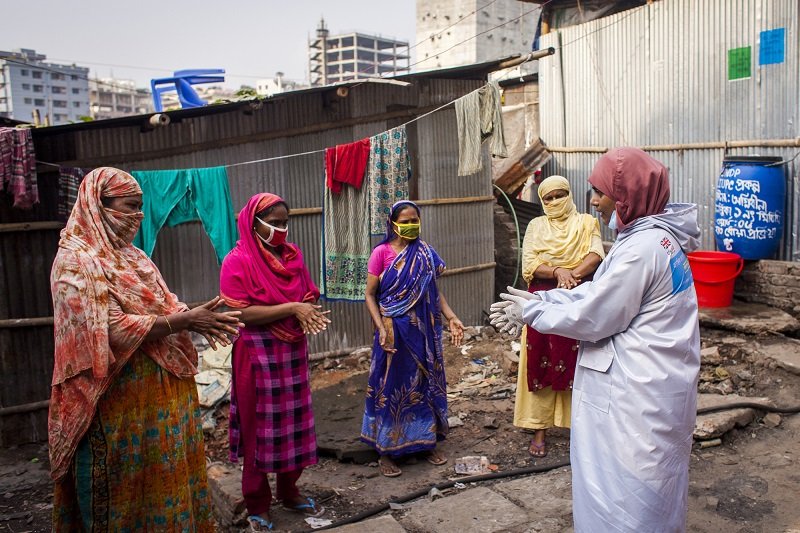
© UNDP Bangladesh/Fahad Kaize : Community workers promote coronavirus prevention awareness and distribute hygiene packages among poor urban households in Bangladesh
Overview
Many rural landless poor continue to move to the cities to escape the effects of climate change, in search of jobs and economic opportunities. The Livelihoods Improvement of Urban Poor Communities Project (LIUPCP) will support them through community empowerment, skills, livelihood, and small-scale infrastructure to tackle urban poverty. The project aims to contribute to the achievement of sustainable growth by reducing urban poverty. Improved social cohesion through participatory and gender-inclusive territorial analysis, planning, and management while increasing awareness.
Expected Impact
Community-based climate resilient infrastructure development.
Urban-poor people are to be provided with skills for employment and entrepreneurship.
Women, including pregnant women and lactating mothers, are to receive conditional food support, health, and nutrition awareness.
Enhance the urban-poor communities’ organizational capability and effective voice.
Provision of education support, especially educational grants, to stop early marriage and drop out from school.
Lessons Learnt
Many authorities work towards urban development and management, but there is a lack of meaningful coordination among them. There is a need for a coordination agency, pro-poor urban policy, and appropriate financial allocation to provide services to the urban poor to alleviate poverty.
The community-led project is appropriate for sustainable development. But it is essential to train the community leaders and monitor them regularly.
LIUPCP brings opportunities to improve the overall condition of urban poor settlements, but its scale-up is needed to meet the actual demand.
Priority Objectives

Engaging in regional and multilateral partnerships and increasing city-to-city cooperation

Protecting those most vulnerable

Providing access to urban infrastructure, social services, and education,
regardless of status

Realising socio-economic inclusion

Supporting reception and advancing community sponsorship initiatives
“Dhaka, being the largest growth hub, has a lot of pull factors that attract migrant people from all parts of the country. The city authority is happy to include them as part of the main economy of the country.”