
Lanús
Mayor
Julián Álvarez
Start of Project
2024
End of Project
Ongoing
Overview
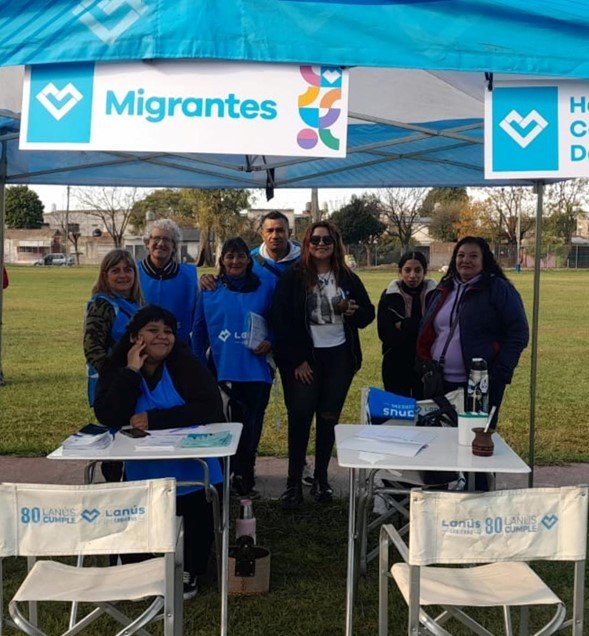
With a migrant population of over 28,000 people, the municipality of Lanús commits to implementing its 2024 public policy aimed at the meaningful integration of the migrant and refugee community and their families. The municipality pledges to conduct direct engagement in neighbourhoods, support the regularizing the immigration status of many families, and foster community dialogue in the fight against discrimination, xenophobia, and racism. It also pledges to inform migrants and refugees about their rights and employability measures, offering training courses for job placement and developing gender-sensitive policies aimed at migrant women micro-entrepreneurs.
These actions are led by Lanús’s institutional structure for migration, the Directorate of Migration and International Relations, which coordinates with municipal departments of social development, employment, and civil registration, among others.
The main objectives are:
To improve the effective integration of the migrant and refugee community.
To ensure that migrants can exercise full citizenship
To strengthen citizen participation.
To promote community dialogue.
To improve coordination and action by local government.
A broad network of collaboration was established with consulates, labour unions, partner municipalities, the provincial government, migrant organizations, community groups, and international agencies to generate concrete actions.
Realized Impact (as of May 2026)
Since this public policy was implemented (one year and three months ago), we have assisted 494 migrants in regularizing their immigration status; we conducted a door-to-door survey of 1,500 migrants, identifying 150 who were not registered in the municipal census and proceeding to register them; and 5,700 migrants exercised their right to vote in the last elections.
Additionally, 122 migrants from Peru, Bolivia, and Paraguay were able to complete their consular procedures at the mobile consular offices (the State in Your Neighborhood), a project carried out in collaboration with various consulates in Argentina.
In addition, 98 municipal employees, 10 union representatives, and 30 migrant community leaders were trained on migrants’ rights and equitable hiring practices for migrant workers. Regarding job training courses, 30 migrant women and 10 migrant men received training through the municipality’s Labor Secretariat.
Consequently, we ensured that migration issues are integrated across all areas of the Municipality, and we established leadership within communities, migrant organizations, and among migrants and refugees. We institutionalized this initiative with the government of the Province of Buenos Aires, other local governments, consulates, and international organizations, achieving coordinated efforts and establishing a coordination committee for the rights of migrants and their families—a committee recognized by the Honorable Deliberative Council of Lanús.
Lessons Learned
Our ability to coordinate among various stakeholders committed to a common goal, as well as our engagement with the migrant community in our area, helps us grow as a municipality. YOU CAN’T CHANGE WHAT YOU DON’T UNDERSTAND. Seeing how these actions literally change the lives of migrants and their families shows us that we’re on the right track.
Priority Objectives

Improve migration governance and forced displacement protection

Realizing socioeconomic inclusion

Eliminating all forms of discrimination and promoting evidence-based public discourse