
Leveraging a Territorial Contract to Improve Reception and Integration of New Arrivals in Annecy
Annecy
Maire:
François Astorg
Start of Project
03/03/2025
End of Project
31/12/2026
Website
https://www.annecy.fr et canaux du CCAS d’Annecy
Overview
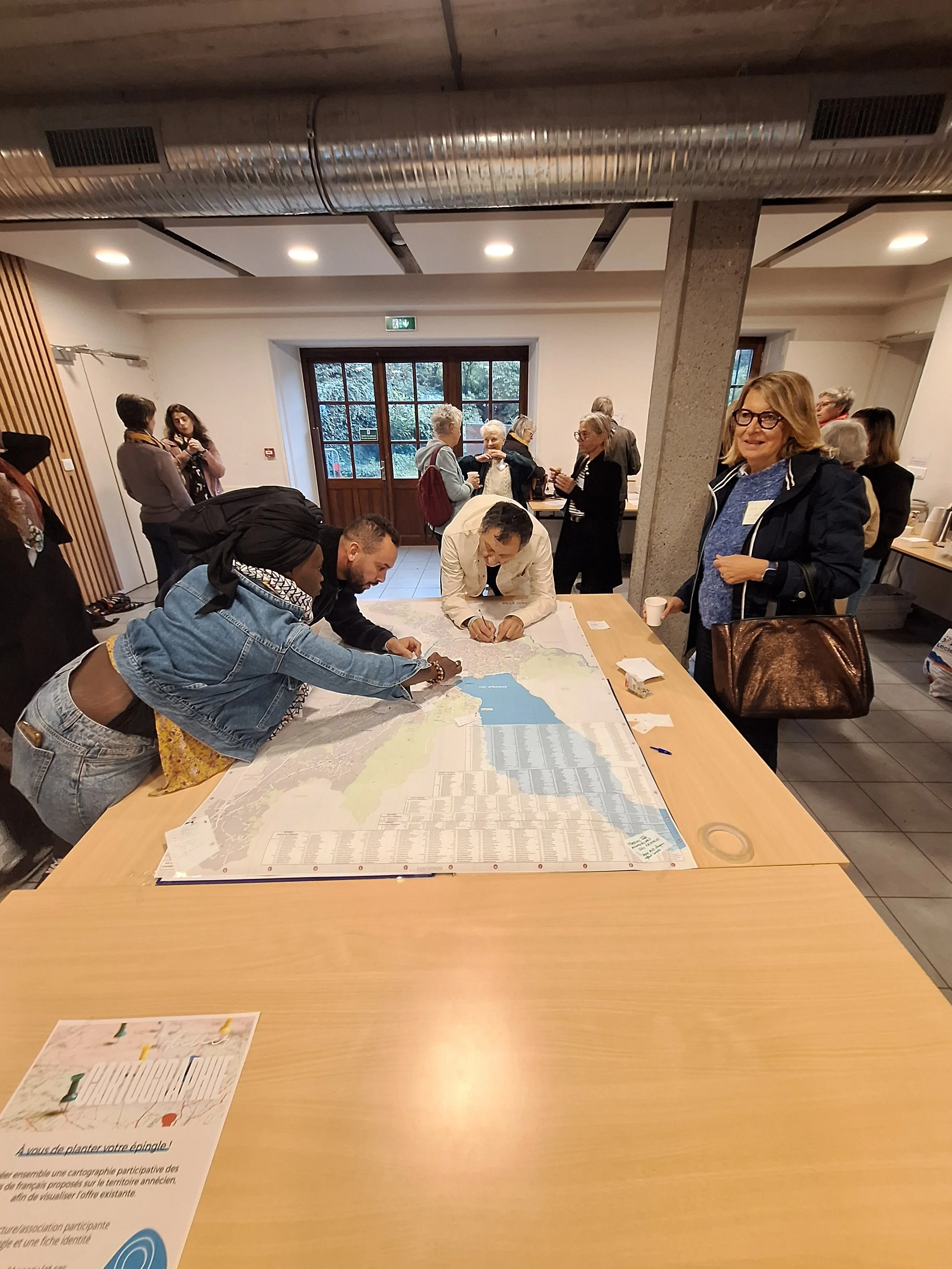
The expected impact of the Annecy Territorial Reception and Integration Contract (CTAI) is a concrete and coordinated improvement in the integration pathways of newly arrived residents, by facilitating access to rights, language learning, housing, health services, and digital autonomy. The initiative also aims to strengthen cooperation among local stakeholders, improve the visibility and coherence of existing support mechanisms, and establish a sustainable framework for inter-institutional dialogue on integration.
The intended outcomes benefit both the individuals supported—through improved orientation, skills development, and reduced breaks in integration pathways—and professionals and volunteers, by providing better tools, a stronger understanding of existing systems, and more coordinated practices. In the medium term, the CTAI also seeks to inform the evolution of local responses and service provision, for example, through research on community-based housing solutions and the adaptation of French-as-a-foreign-language courses for non-literate learners.
Evaluation will be based on several complementary tools, including:
Qualitative and quantitative monitoring of implemented actions (number of training sessions, participant profiles, and feedback from beneficiaries);
Collective review meetings with partners;
Analysis of the findings from the housing study carried out under the contract, and
Annual reporting submitted to the Departmental Directorate for Employment, Labour and Solidarity (DDETS).
The CTAI's coordination, overseen by a dedicated coordinator, ensures continuous monitoring, effective use of field-level feedback, and ongoing adjustments to priorities and actions.
Expected Impact
The initiative aims to deliver a coordinated and tangible improvement in the integration pathways of newly arrived residents by facilitating access to rights, language learning, housing, health services, and digital autonomy. The initiative also strengthens cooperation among local actors, improves the visibility of existing support mechanisms, and establishes a sustainable framework for inter-institutional dialogue on integration.
The expected outcomes benefit both migrants—through improved orientation, skills development, and smoother integration pathways—and professionals and volunteers, by strengthening coordination, tools, and understanding of available services. In the medium term, the CTAI also seeks to inform the evolution of local responses, including through research on community-based housing and the adaptation of French-language courses for non-literate learners.
Evaluation is based on ongoing qualitative and quantitative monitoring, collective reviews with partners, analysis of the housing study, and annual reporting to the Departmental Directorate for Employment, Labour and Solidarity (DDETS). A dedicated coordinator ensures continuous follow-up and adaptive management of the initiative.
Lessons Learnt
One of the key lessons learnt from the CTAI is the importance of strong coordination among local actors to respond effectively to the needs of newly arrived residents. Regular coordination meetings have fostered a shared dynamic among institutions, civil society organisations, volunteers, and professionals, thereby improving information sharing and collective action.
The experience also highlighted the interconnected nature of integration challenges, showing that issues such as housing cannot be addressed in isolation from language, administrative, or social needs. CTAI actions, including adapted French language courses and digital inclusion workshops, therefore adopt a holistic approach.
Ultimately, the initiative highlighted the importance of training for professionals and volunteers to enhance guidance, manage service constraints, and support migrants more effectively. A key follow-up outcome is the development of a concise resource guide for people in migration situations, to be pursued in 2026.
Priority Objectives

Eliminating all forms of discrimination and promote evidence-based public discourse

Protecting those most vulnerable

Realising socio-economic inclusion