
A Home Away from Harm: Sheltering IDP Families in Dunaivtsi
Dunaivtsi City Council
Mayor
Velina Zaiats
Start of Project
01/01/2023
End of Project
30/11/2024

Overview
The town of Dunaivtsi – home to 15,243 residents – has received over 5,000 IDPs since the Russian invasion of Ukraine, and the wider Dunaivtsi territorial community has received more than 12,500 IDPs. To address the needs of IDP families, the Department of Social Protection and Labor of the Dunaivtsi City Council commits to rehabilitate a medical building to establish a family center that will provide housing and wraparound inclusionary services to 30 internally displaced families with young children. In addition to housing, the family center will provide internally displaced children and their caregivers psychological counselling and access to social services to support their well-being, inclusion, and healthy development. The center’s wraparound offerings will include individual and family meetings with psychologists, educational and touristic excursions, and visits to after-school and sport programs. Dunaivtsi territorial community will also furnish the family center with age-responsive indoor and outdoor spaces for children and their caregivers to safely play and rest. With this commitment, Dunaivtsi territorial community will fill a critical need for dignified and safe housing for internally displaced families. This project is supported by the Global Cities Fund for Migrants and Refugees.
Expected Impact
The family center in Dunaivtsi territorial community will provide safe and dignified housing for 30 families with children displaced during Russia’s invasion. In addition to fulfilling essential needs, the center's housing provides IDPs a stable and comfortable alternative to leaving Ukraine. This local housing will make it easier for IDPs from nearby regions to return to their original homes after the war.
The center’s wraparound community orientation and integration activities will improve internally displaced families’ social inclusion and sense of belonging in Dunaivtsi. By providing tailored psychological care to children and their caregivers, the center will also promote children’s healthy emotional development and help families cope with trauma.
Importantly, the project will forge constructive relationships between Dunaivtsi’s local government, receiving community, and internally displaced families. These new avenues for engagement will improve internally displaced peoples’ civic inclusion and encourage their involvement in local policymaking and implementation.
After the war, Dunaivtsi plans to repurpose the family center as a children’s camp or a rehabilitation facility for domestic and gender-based violence survivors. The center and its public spaces promise to be a hub for community inclusion and support far into the future.
Lessons Learnt
The importance of effective interaction and communication with partners. The project team has established itself in the opinion that the implementation of a rather large-scale project, which involves many processes, requires coordination of actions between partners, clear coordination of activities, and implementation of effective communication. After all, it is easier to achieve the goal and realize the full range of opportunities with joint and coordinated efforts.
The need to take into account the wishes of the project's target audience. Already at the stage of project preparation, it became necessary to find out the wishes and needs of the residents of the shelter for their further consideration by the designers. During the implementation of the project, we saw how important it is that the target audience gets exactly what they need and what they enjoy. For example, when children like the space they are in, interesting opportunities for development appear. This makes the results of the project implementation even more fulfilling for the project team.
Realised Impacts (As of November 2025)
The project directly benefited 60 people, 3 among them with disabilities, while the project activities indirectly benefited 165 local and IDP residents who do not live in the shelter. The project also involved the meaningful participation of IDPs; it was designed and developed in collaboration with IDPs already living in the facility, who advised on the construction work and the inclusionary activities. The city also offered the IDP residents paid work once renovations commenced. With support from the MMC’s Global Cities Fund for Migrants and Refugees, Dunaivtsi repurposed an abandoned hospital to create a family center that is providing dignified housing to 30 internally displaced families with children. The center was able to provide the IDPs all the services it committed to, plus a public playground for children, and documentation services from the Mobile Administrative Services Center.
The Dunaivtsi City Council is working towards continuing the operation of the family center through in-kind support.
Priority Objectives

Protecting those most vulnerable

Realising socio-economic inclusion
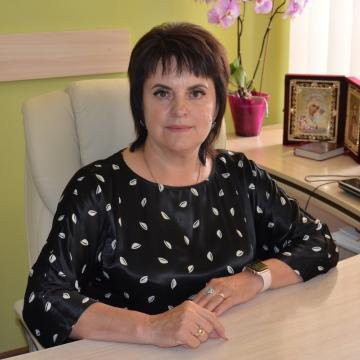
“Since the beginning of the war, Dunaivtsi has received over 10,000 people coming from different regions of Ukraine, and at the moment, we have nearly 4,000 internally displaced people in our city. The Global Cities Fund for Migrants and Refugees will help us improve the lives of children and families displaced today, while building our capacity to address future needs once the war is over.”