
Casa de la Mujer: Comprehensive Care, Protection, and Empowerment Centre for Women in Manta
Municipality of Manta
Mayor
Marciana Auxiliadora Valdivieso Zamora
Start of Project
2025
End of Project
11/30/2027
Overview
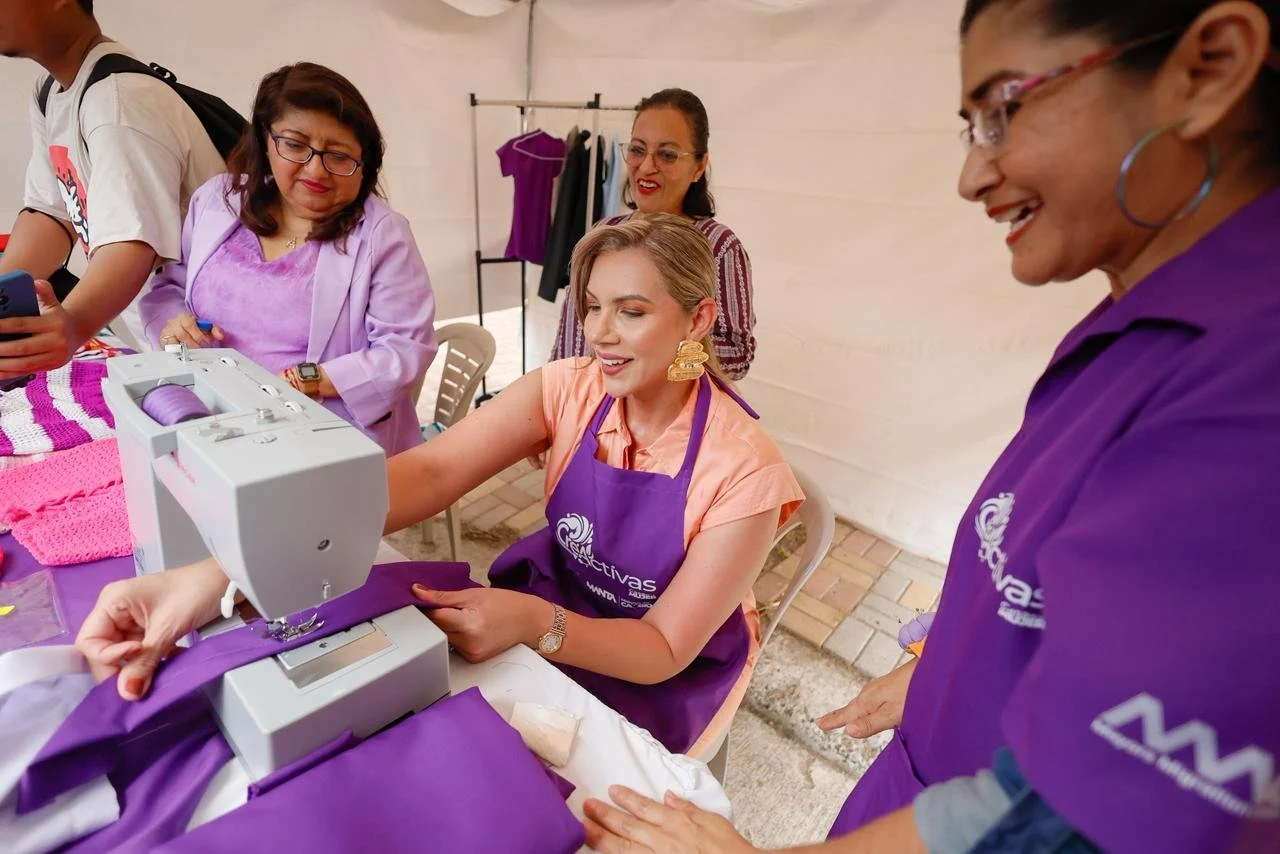
Human mobility in Manta is a strategic pillar for territorial development and social cohesion. Under the link between humanitarian action and development, the Municipality of Manta, through the “Casa de la Mujer,” is implementing the technical initiative: “Inclusion of migrant women and the host community in the local market for the production of goods and services belonging to the popular and solidarity-based economy of the Manta Canton.” This institutional effort ensures the territorialization of public policies with a focus on rights and services for refugees. The intervention prioritizes comprehensive stabilization through psychological, social, and legal services, which constitute the prerequisite for economic autonomy. This protective framework mitigates structural barriers, allowing emotional and legal stabilization to facilitate long-term labour integration. Complementarily, training, employability, and entrepreneurship programmes are implemented to strengthen livelihoods. By promoting productive inclusion, cycles of dependency are broken and community financial sustainability is fostered. Through technical support and participatory coordination, this initiative contributes to reducing inequalities and preventing gender-based violence. Thus, the proposal aligns individual capacities with the global goals of the SDGs, ensuring a tangible contribution to local sustainable development.
Expected and Achieved Impact
The coordination of comprehensive services at the Women’s Centre serves as a catalyst for the link between protection and development, transforming immediate assistance into a platform for structural empowerment. By integrating psychological, social, and legal support, the restoration of rights is ensured through a multidimensional resilience-based approach. This technical intervention establishes emotional stability and legal security as analytical preconditions for economic autonomy, enabling migrant, refugee, and hosted women to transition from vulnerability toward the exercise of full and productive citizenship. In this sense, comprehensive protection is not an end in itself, but rather the engine that drives the achievement of tangible economic results.
Measurable Results and Dynamics of the Popular and Solidarity Economy
Quantifying the transition toward economic resilience is imperative to validate integration into the local market within the framework of the Popular and Solidarity Economy. It is projected that 75% of beneficiaries will achieve a significant increase in their income and employability, strengthening their ties to productive value chains. At the same time, the fact that 50% of participants report a substantial improvement in their support networks and a reduction in discrimination serves as a critical indicator of social cohesion and territorial resilience. These findings validate the model’s effectiveness in mitigating gender-based violence (GBV) by reducing economic dependence and closing structural inequality gaps.
Future Outlook and Strategic Alignment
The project’s outlook positions it as a scalable local management model, whose sustainability lies in the consolidation of individual and associative initiatives. This dynamic not only drives inclusive territorial development but also ensures the replicability of the methodology in diverse contexts of human mobility. Finally, the technical validation of these achievements ensures strategic alignment with the Sustainable Development Goals (SDGs), strengthening institutional capacities to generate lasting solutions and ensure the structural autonomy of vulnerable populations.
Lessons Learned
The implementation of the Women’s Centre by the Municipality of Manta serves as a strategic model that bridges the gap between protection and development. By integrating the response to gender-based violence with the strengthening of livelihoods, the initiative takes a multidimensional approach to promoting the autonomy of migrant, refugee, and host women, generating valuable insights for its scalability and sustainability.
Among the key positive lessons is the comprehensive approach, which combines legal and psychosocial services with employability training, thereby strengthening socioeconomic empowerment. Furthermore, inter-institutional coordination with cooperation agencies has optimized technical capacities and reduced operational risks. The active participation of the beneficiaries has contributed to strengthening the social fabric and fostering community leadership.
In terms of challenges, structural barriers such as economic instability and caregiving burdens persist, limiting participation in productive processes. Furthermore, the sustainability of the ventures requires continuous access to financing and specialized technical support.
In response to these challenges, adjustments have been implemented to increase the flexibility of training processes and strengthen on-the-ground technical support. These improvements promote socioeconomic inclusion through a rights-based approach, aligning the initiative with the Sustainable Development Goals, particularly SDG 5 and SDG 8.
Priority Objectives

Improving migration governance and forced displacement protection

Protecting those most vulnerable

Realizing socio-economic inclusion

“At the City of Manta, we are working to ensure that no woman is left behind, guaranteeing their access to opportunities, protection, and economic independence. We believe in an inclusive city where human mobility translates into development and well-being for the entire community.”